The Doctor Said “Nothing I Can Do” for Your IBS or IBD. Now What?
The Appointment That Somehow Made You Feel Worse
You waited weeks for the appointment. Maybe months. You rehearsed your symptoms like testimony: bloating after meals, gas that shows up with the timing of a malicious prank, stomach pain, bathroom urgency, diarrhea, constipation, food reactions, fatigue, anxiety around leaving the house, and the charming little terror of wondering if your gut is about to humiliate you in public. Then the doctor looked at your labs, glanced at the screen, and gave you the sentence that somehow explains everything and nothing at the same time.
“There’s nothing I can do.”
Or maybe it came dressed in softer clothes: “You just have to manage it.” “Try reducing stress.” “Try FODMAP.” “Your tests are normal.” “You may need to learn to live with it.” Human comfort, apparently, now ships as a shrug with a billing code.
If you have IBS or IBD, that kind of answer can feel devastating. It can make you wonder if your symptoms are being taken seriously. It can make you feel dramatic, embarrassed, or too complicated. It can also send you into the internet swamp, where every third person is selling a miracle powder and every fourth person wants you to eliminate half the grocery store until dinner looks like beige punishment.
Here is the calmer truth: “nothing dangerous showed up” is not the same as “nothing is wrong.” And “there is no simple cure” is not the same as “there is no plan.”
IBS and IBD Deserve More Than a Shrug
IBS and IBD are different conditions, but both deserve better than dismissal. NIDDK describes IBS as a group of symptoms that occur together, including repeated abdominal pain and changes in bowel movements such as diarrhea, constipation, or both. NIDDK also notes that IBS happens without visible signs of damage or disease in the digestive tract and that studies suggest about 12 percent of people in the United States have IBS. That is not a rare little stomach quirk. That is millions of people trying to live normal lives while their intestines behave like an unsupervised group project.
IBD is a different beast. It stands for inflammatory bowel disease, most commonly Crohn’s disease and ulcerative colitis. The Crohn’s & Colitis Foundation reports that nearly 1 in 100 Americans has IBD. A large 2023 prevalence study estimated about 2.4 to 2.7 million Americans are diagnosed with inflammatory bowel diseases. IBD involves inflammation, immune activity, flare risk, complications, monitoring, and medical treatment. It should never be placed in the “just deal with it” drawer.
So if a doctor says there is “nothing I can do,” the next question is simple: nothing to cure it today, nothing to test, nothing to treat, nothing to track, or nothing else you are willing to explain in this appointment? Those are very different things.
A Softer Translation of the Worst Sentence
Sometimes doctors use blunt language because they are rushed, burned out, or trapped inside a healthcare system designed by spreadsheet goblins. That does not excuse the impact, but it helps translate the sentence.
What they may mean is this: your tests did not show cancer, infection, obvious tissue damage, or another emergency. For IBS, the problem may live in gut function, gut sensitivity, motility, food tolerance, microbiome patterns, and gut-brain signaling. For IBD, the issue may be managing disease activity, preventing flares, protecting nutrition, and matching treatment to your actual inflammation status.
That is still a plan. Or at least, it should become one.
Soft Next Step: Build a Plan Instead of Collecting Vague Advice
If you are tired of being handed vague gut health advice and expected to decode your digestive system like an ancient cursed scroll, GassyGuts was built for this exact middle space: the place between “my tests are normal” and “my life is still being run by my stomach.” Start with the bigger picture in natural gut relief for IBS, IBD, and bloating, then use this article as your roadmap for what to ask, track, and change next.
First, Clarify What Was Actually Ruled Out
A normal test result can be a relief and a frustration at the same time. The relief is obvious. Nobody wants a terrifying diagnosis. The frustration is also real: you still have pain, bloating, gas, urgency, constipation, diarrhea, or flare anxiety, and now everyone is acting like the mystery solved itself because the lab results behaved.
Ask your provider what was actually ruled out. Did you have basic bloodwork? Stool testing? Celiac screening? Inflammation markers? Colonoscopy? Imaging? Medication review? Family history review? Did your symptoms suggest IBS-C, IBS-D, IBS-M, IBD activity, food intolerance, bile acid diarrhea, infection, pelvic floor dysfunction, or something else entirely?
The American College of Gastroenterology guideline for IBS recommends celiac disease blood testing in patients with IBS and diarrhea symptoms. It also recommends a limited trial of a low FODMAP diet for global IBS symptoms and suggests soluble fiber, rather than insoluble fiber, for global IBS symptoms. Translation: real IBS care has details. It is not just “eat fiber” tossed into the room like confetti.
Questions to Ask After a Dismissive IBS or IBD Appointment
Bring questions to the next visit. Doctors are human, which is unfortunate for everyone involved, but a clear list can force the appointment to become more useful.
Ask: What diagnosis are you giving me? Is this IBS, IBD, both, or something else? What type of IBS pattern do I seem to have? What tests have ruled out inflammatory bowel disease, celiac disease, infection, or other causes? What symptoms should make me call sooner? What should I track before my next appointment? What treatment options fit my main symptoms? What should I try first, and how long should I try it?
For IBD, ask even more directly: What is my current disease activity? Am I in remission or flaring? What labs, stool markers, imaging, or scopes are being used to monitor inflammation? What is the plan if symptoms worsen? How do we protect nutrition, energy, weight, and quality of life?
Those questions turn “deal with it” into “define the next step.” Very different energy. One is abandonment in a cardigan. The other is care.
When a Second Opinion Makes Sense
Sometimes the next step is not another supplement, another elimination diet, or another late-night search for “why does my stomach hate me.” Sometimes the next step is a second opinion. This is especially reasonable if your IBS diagnosis came with severe diarrhea, persistent weight loss, blood, anemia, nighttime symptoms, a strong family history of IBD or colon cancer, or a treatment plan so vague it could have been written on a napkin during a power outage.
A second opinion does not mean your first doctor is terrible. It means your symptoms deserve clarity. Gastroenterology is complicated, IBD management can change over time, and IBS care often requires matching the plan to the person’s actual pattern. If the visit ends with “just live with it,” ask for the chart notes, test results, lab values, colonoscopy report if you had one, medication list, and any diagnoses attached to your visit. Bring those to the next provider so the appointment starts with data instead of fog.
You can also ask for referrals to a registered dietitian with GI experience, a pelvic floor physical therapist if constipation or incomplete evacuation is part of the pattern, or a therapist trained in gut-brain strategies if anxiety, trauma, panic, or chronic stress keeps turning the digestive alarm system up to nightclub volume.
Learn the Red Flags Without Spiraling
IBS can be painful and disruptive, but it does not damage the digestive tract or raise colon cancer risk, according to Cleveland Clinic. That reassurance matters. But red flags still matter too.
Talk to a qualified healthcare professional promptly if you have blood in the stool, black stool, unexplained weight loss, persistent fever, anemia, dehydration, severe or worsening abdominal pain, persistent vomiting, nighttime diarrhea, a major sudden change in bowel habits, or new symptoms after age 50. If you have diagnosed IBD and symptoms escalate, that deserves medical follow-up because flare activity is not a cute little wellness puzzle.
The goal here is not panic. Panic already has excellent marketing. The goal is a healthier middle ground: do not assume every cramp is disaster, and do not ignore serious changes because one appointment made you feel like your gut concerns were too boring to investigate.
Track Patterns, Not Just “Bad Foods”
Most people with IBS, IBD, bloating, gas, or food sensitivity confusion start hunting for one villain food. Gluten. Dairy. Onions. Garlic. Beans. Apples. Coffee. Salad. Joy. Eventually the list gets so long that food starts to feel like a minefield with calories.
Food matters, but patterns matter more. Track meal timing, symptom timing, bloating level, pain level, stool form, urgency, constipation, diarrhea, gas, sleep, stress, menstrual cycle timing if relevant, alcohol, caffeine, medications, supplements, movement, hydration, and what helped. A three-week symptom log can reveal more than months of guessing.
For example, someone may blame broccoli for bloating when the deeper pattern is constipation plus large meals plus stress plus eating too fast. Someone else may blame “healthy food” when the actual issue is jumping from low fiber to a giant raw salad during a sensitive gut week. The digestive system is not a Roomba with feelings. It is more annoying than that.
This is where Diagnosed with IBS but given no answers fits naturally into the GassyGuts ecosystem. The diagnosis is the doorway. Pattern tracking is how the doorway stops feeling like a wall.
Stop Treating Food Like the Only Suspect
Food is important. Food can trigger symptoms. Food can support the microbiome. Food can also become the scapegoat for every digestive problem because it is visible, trackable, and easy to blame. Meanwhile, constipation, stress physiology, sleep debt, inflammation, medication side effects, eating speed, meal size, alcohol, caffeine, and nervous system activation stand in the background wearing fake mustaches.
NIDDK notes that doctors may treat IBS with changes in diet, other lifestyle changes, medicines, probiotics, and mental health therapies. The American Gastroenterological Association IBS toolkit also describes IBS care as involving diet and nutrition management, medication, and behavioral management. In plain English: a real IBS plan is layered. It should not be one sad handout and a vague suggestion to relax, as if humans keep a spare nervous system in the pantry.
For IBD, food strategy also has to respect inflammation, medication, flare status, nutrient needs, weight changes, and medical monitoring. If symptoms include bleeding, rapid weight loss, severe pain, dehydration, or escalating diarrhea, that is medical territory first. GassyGuts can support education and better habits, but IBD management belongs in partnership with qualified clinicians.
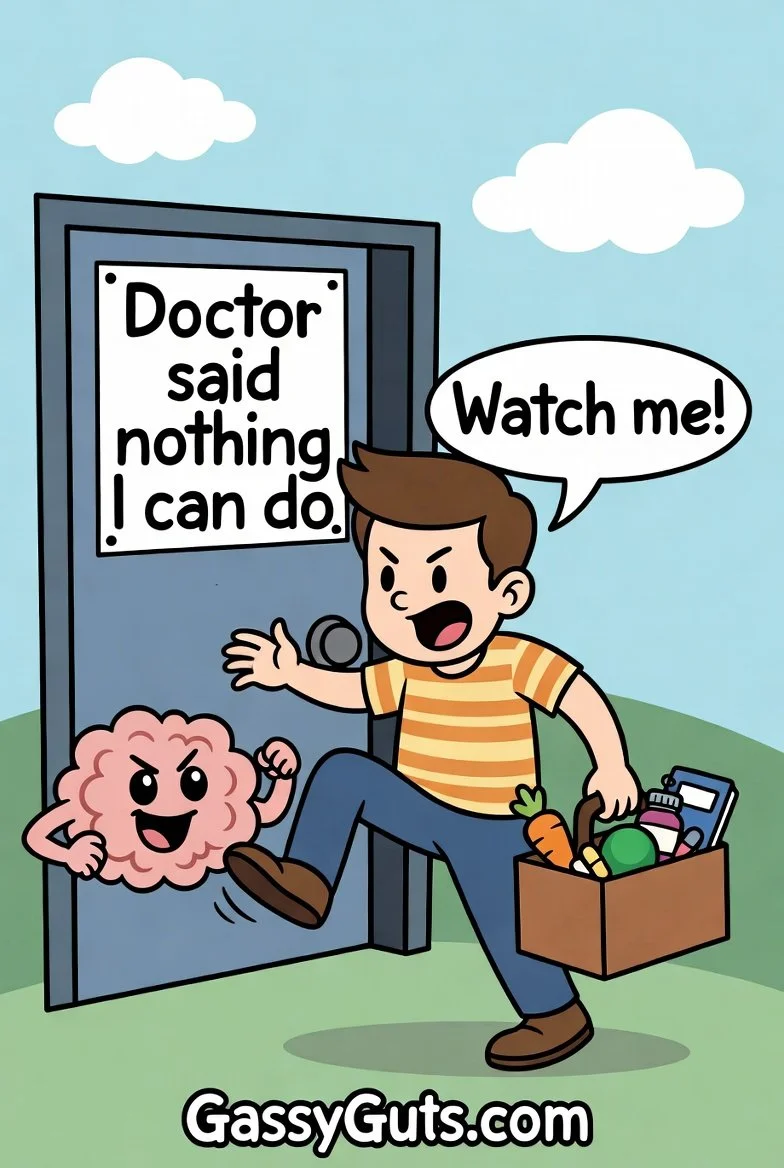
Let’s kick down that door to gut relief together!
Why “Just Try FODMAP” Often Feels Like a Half-Answer
The low FODMAP diet can help some people with IBS. It is a real tool. The problem is the way it is often handed to people: “Try this,” with the same level of explanation you get from a fortune cookie. Then people eliminate foods, get scared of reintroduction, lose variety, and end up eating a tiny rotation of “safe” meals while still bloated. A beige prison with grocery receipts.
The ACG guideline frames low FODMAP as a limited trial, not a forever identity. That distinction is huge. FODMAP should be structured, short-term, and followed by reintroduction when appropriate, ideally with professional guidance. It should create clarity, not food fear.
This is why GassyGuts takes a skeptical but fair stance. FODMAP can be useful. FODMAP can also disappoint when it becomes the whole plan. If you have already tried restriction and still feel awful, explore the GassyGuts piece on natural remedies for IBS and IBD for a wider view of digestive support that includes common sense, not just subtraction.
The Phyto Diet Angle: Rebuilding Instead of Only Removing
The Phyto Diet framework gives GassyGuts a stronger lane than generic gut health content. Instead of only asking, “What do we remove?” it asks, “What can we build?” That means focusing on colorful plant foods, phytonutrients, plant diversity, tolerable fiber, polyphenols, food quality, hydration, protein adequacy, healthy fats, and gradual digestive resilience.
This does not mean throwing a giant bowl of raw kale at a person in an IBD flare and calling it wellness. Please, humanity has suffered enough. The Phyto Diet needs personalization. Some people need gentle cooked foods. Some need lower fiber during active flares. Some need careful reintroduction. Some need medical nutrition therapy. The principle is not “more plants at all costs.” The principle is smarter nourishment, better tolerance, and long-term gut support.
For readers who feel trapped between medical dismissal and extreme diet culture, the GassyGuts gut health reset services offer a more guided path: personalized phyto-nutrient guidance, breathwork, mind-body movement practices, herbal remedy support, and ongoing check-ins, according to the GassyGuts services page. That is the difference between random tips and an actual ecosystem.
Build a Real Next-Step Plan
A better IBS or IBD support plan should include five layers.
First, a diagnosis clarification layer. Know the difference between IBS and IBD. If you are unsure, read IBS vs. IBD so the acronyms stop clanging around like two identical soup cans.
Second, a medical safety layer. Know your red flags, your testing history, your medication plan, and your follow-up timeline. This is especially important with IBD, severe symptoms, bleeding, weight loss, anemia, dehydration, or major symptom changes.
Third, a symptom pattern layer. Track what actually happens instead of trying to remember everything during a rushed appointment while sitting on tissue paper under fluorescent lights.
Fourth, a food strategy layer. Look at meal timing, fiber type, food quality, plant diversity, FODMAP tolerance, ultra-processed foods, hydration, protein, fat, and reintroduction strategy. The goal is a sustainable gut health plan, not a lifelong list of foods you fear.
Fifth, a gut-brain support layer. IBS in particular often involves gut-brain interaction. Stress does not mean symptoms are imaginary. It means the nervous system can amplify real digestive sensations. Breathing, sleep, gentle movement, therapy, gut-directed mental health strategies, and nervous system regulation can belong in the plan without blaming the patient.
What “Nothing Can Be Done” Should Become Instead
The sentence “nothing can be done” should be retired from gut health care and launched directly into the sun. A better version sounds like this: “We ruled out certain dangerous causes. Your symptoms still deserve a plan. Here is what we know, here is what we still need to watch, here is what to track, here is what to try first, and here is when to follow up.”
That is the shift. From dismissal to structure. From fear to pattern recognition. From random restriction to strategic nourishment. From “good luck” to “here is the next step.”
Your gut may be dramatic. Your plan should be clear.
Final CTA: Get Out of the Digestive Dead End
If a doctor told you there is nothing to do for your IBS or IBD, do not turn that sentence into your life sentence. Use it as the moment you demand a better map. Ask sharper questions. Track better patterns. Learn the difference between IBS, IBD, food sensitivity, bloating, inflammation, and gut-brain overload. Build a plan that respects your symptoms and your sanity.
Start with GassyGuts, explore the GassyGuts blog, and take the next step with GassyGuts gut health reset services. You deserve more than bland gut health advice, restrictive diet panic, and medical robot-speak. You deserve a smarter, more human digestive health strategy that actually helps you understand what your gut is trying to tell you.
