Can IBS and IBD Be From Trauma? The Gut-Brain-Inflammation Story Nobody Explains Clearly
Can IBS and IBD Be From Trauma? The Answers You’ve Wanted.
If your stomach started acting haunted after years of stress, grief, panic, survival mode, or plain old human chaos, you are allowed to ask the obvious question: can IBS and IBD be from trauma? It is a fair question. It is also the kind of question that gets flattened into useless advice like “reduce stress,” as if stress is a browser tab you can close. Humanity really did invent civilization and then made everyone clench their jaw through lunch. Brilliant work, team.
Here is the clean answer. Trauma can be connected to IBS. Trauma and chronic stress can also worsen IBD symptoms and flare patterns. Current evidence supports trauma, early life stress, PTSD, anxiety, and long-term nervous system activation as meaningful players in gut health. At the same time, IBS and IBD are different conditions, and treating them like twins in matching digestive sweatpants creates confusion. IBS is generally understood as a disorder of gut-brain interaction. IBD, including Crohn’s disease and ulcerative colitis, involves immune-driven inflammation and tissue injury. Same neighborhood. Different house fires.
The National Institute of Diabetes and Digestive and Kidney Diseases explains that IBS commonly involves repeated abdominal pain with changes in bowel movements, including diarrhea, constipation, or both. Doctors remain unsure of one single cause. Mayo Clinic notes that IBS symptoms often become worse or more frequent during periods of high stress. Research also links PTSD with a higher likelihood of IBS, and early life adversity has been tied to changes in brain-gut biology. That means the gut-brain axis is more than wellness wallpaper. It is a real communication system, and trauma can make that system loud, jumpy, and easily offended by lunch.
With IBD, the story needs more precision. Stress and trauma are better understood as possible flare amplifiers, nervous system burdens, and quality-of-life disruptors rather than simple “causes.” NIDDK has highlighted research showing biological links between stress and worsening IBD symptoms. Reviews on psychological stress in IBD describe pathways involving the brain-gut-microbiome axis, inflammation, immune signaling, and relapse risk. Translation: stress deserves a seat at the table, but it is not the whole dinner.
That is exactly why GassyGuts exists. The goal is not to scare people into blaming every symptom on trauma, food, inflammation, or one sad childhood memory hiding behind a sandwich. The goal is to help people understand patterns, connect the dots, and build a realistic digestive health strategy that respects the nervous system, the immune system, food quality, gut resilience, and the everyday indignity of bloating in pants that fit yesterday. For a broader starting point, the Natural Gut Relief for IBS, IBD, and Bloating guide is a smart next read.
The Problem: Your Gut Is Not Separate From Your Life
Digestive advice often treats the gut like a plumbing issue. Too much gas? Remove beans. Constipated? Add fiber. Diarrhea? Blame dairy. Bloated? Congratulations, here is a list of foods to fear for the next three business years. This advice can help sometimes, but it misses the bigger picture. The gut is not a pipe. It is a living, nerve-rich, immune-active, bacteria-loaded ecosystem with its own moods, rhythms, and dramatic little opinions.
The gut communicates constantly with the brain through nerves, hormones, immune signals, and the microbiome. This gut-brain axis helps regulate motility, sensitivity, digestion, inflammation, appetite, and pain perception. When a person lives through trauma, chronic stress, emotional neglect, repeated danger, grief, burnout, or fear, the nervous system can learn to stay on alert. That alert state can shape digestion because the body prioritizes survival over calm, coordinated gut function.
Think about what happens during fear. The body redirects energy. Muscles tense. Breathing changes. Stress hormones rise. Digestion can speed up, slow down, cramp, tighten, empty urgently, or freeze like a deer trying to understand tax forms. For someone with IBS, that can mean pain, urgency, bloating, diarrhea, constipation, nausea, or a gut that reacts differently to the same food depending on the emotional weather of the day.
For someone with IBD, chronic stress can influence symptom perception, immune activity, inflammation pathways, sleep, medication adherence, eating patterns, and flare vulnerability. The Crohn’s & Colitis Foundation describes stress as a factor that can worsen IBD symptoms through inflammation and microbiome disruption. That matters because people with IBD already carry a condition where inflammation deserves serious medical care, not internet guesswork wearing yoga pants.
This is the central GassyGuts stance: gut symptoms need a wider lens. Food matters. Inflammation matters. Stress matters. Trauma can matter. Sleep matters. The microbiome matters. Medical evaluation matters. Patterns matter. Randomly eliminating half the produce aisle while ignoring the nervous system is a strange way to pursue healing, yet here we are, because apparently humans needed another way to make dinner emotionally complicated.
Can Trauma Cause IBS?
IBS is where the trauma connection becomes especially important. Research has repeatedly pointed toward associations between adverse childhood experiences, PTSD, psychological stress, and IBS. A meta-analysis indexed in PubMed found that PTSD is associated with an increased likelihood of IBS. Research on early life adversity also suggests links between early stress, brain-gut changes, mood vulnerability, and gut-regulated metabolites.
That does not mean every person with IBS has trauma. It also does not mean trauma is the only explanation for IBS. IBS can develop after infection, antibiotic disruption, food poisoning, microbiome shifts, hormonal changes, motility changes, visceral hypersensitivity, genetic susceptibility, and other factors. Still, trauma can help explain why some people have a gut that reacts intensely to stress, why symptoms flare during emotional threat, and why “just avoid trigger foods” feels laughably incomplete.
One helpful way to understand IBS is through three overlapping patterns: motility, sensitivity, and signaling. Motility refers to how fast or slowly food and stool move. Sensitivity refers to how strongly the gut feels pressure, gas, stretching, or normal digestive movement. Signaling refers to communication between the gut, brain, immune system, and microbiome. Trauma can influence all three through the stress response.
A person with trauma-linked gut sensitivity may experience normal gas as intense pain. A stressful conversation may trigger cramps. A safe food may feel unsafe during a panic-heavy week. Constipation may worsen when the body is tense and guarded. Diarrhea may appear during anticipation, conflict, travel, work pressure, or relational stress. The gut becomes less like a quiet digestive organ and more like a smoke alarm installed directly above a toaster.
This helps explain why a purely restrictive diet can disappoint people with IBS. If the nervous system is part of the pattern, food elimination alone may bring partial relief and still leave the person stuck. The person then blames themselves, restricts more, fears food harder, and turns meals into a hostage negotiation. A smarter plan looks at food triggers, yes, but also meal timing, fiber type, plant diversity, hydration, sleep, movement, stress load, symptom tracking, and gut-brain support.
For readers who received an IBS label and then got abandoned with vague advice, Diagnosed With IBS But Given No Answers? What to Do Next is a strong internal bridge. The trauma article should sit right beside that piece as the “why your gut may react like it remembers things” pillar.
Can Trauma Cause IBD?
IBD requires a different answer because Crohn’s disease and ulcerative colitis involve chronic inflammation. The best current framing is this: trauma and chronic stress may contribute to disease burden, symptom severity, flare risk, and brain-gut-immune dysregulation, but they should not be presented as the sole cause of IBD. IBD is complex. Genetics, immune function, intestinal barrier integrity, microbiome changes, environmental exposures, and inflammatory pathways all matter. The human body, ever committed to being needlessly complex, made sure one villain would be too easy.
NIDDK describes IBD as chronic intestinal inflammation with debilitating symptoms and notes that stress has been associated with triggering flare-ups. A major review in Psychological Stress in Inflammatory Bowel Disease describes chronic psychological stress as a factor that can trigger deterioration and relapse through immune, microbial, and brain-gut pathways. This means stress reduction belongs inside an IBD support strategy, but medical treatment remains central.
This distinction matters ethically and practically. People with IBD should never be told that they caused their disease by being stressed or traumatized. That is cruel, inaccurate, and wildly unhelpful. They also deserve support for the emotional and nervous system load of living with a chronic inflammatory illness. IBD can create trauma too. Flares, hospitalizations, urgency, accidents, pain, fatigue, steroids, surgery fears, and the social isolation of bathroom mapping can all leave marks on the nervous system.
That is where GassyGuts can speak with more humanity than the usual sterile gut content. A person with IBD needs medical care, monitoring, and appropriate treatment. They may also benefit from nutrition support, stress regulation, symptom tracking, anti-inflammatory food patterns, nervous system work, sleep protection, and practical flare planning. The point is integration. The point is a plan that respects biology and lived experience at the same time, which apparently is revolutionary because the internet prefers choosing one thing and yelling about it.
For internal linking, this section should naturally connect readers to IBS vs. IBD: What’s the Difference? and Living in the Gut Gray Zone because the trauma question often comes from people who feel stuck between labels, symptoms, and unanswered questions.
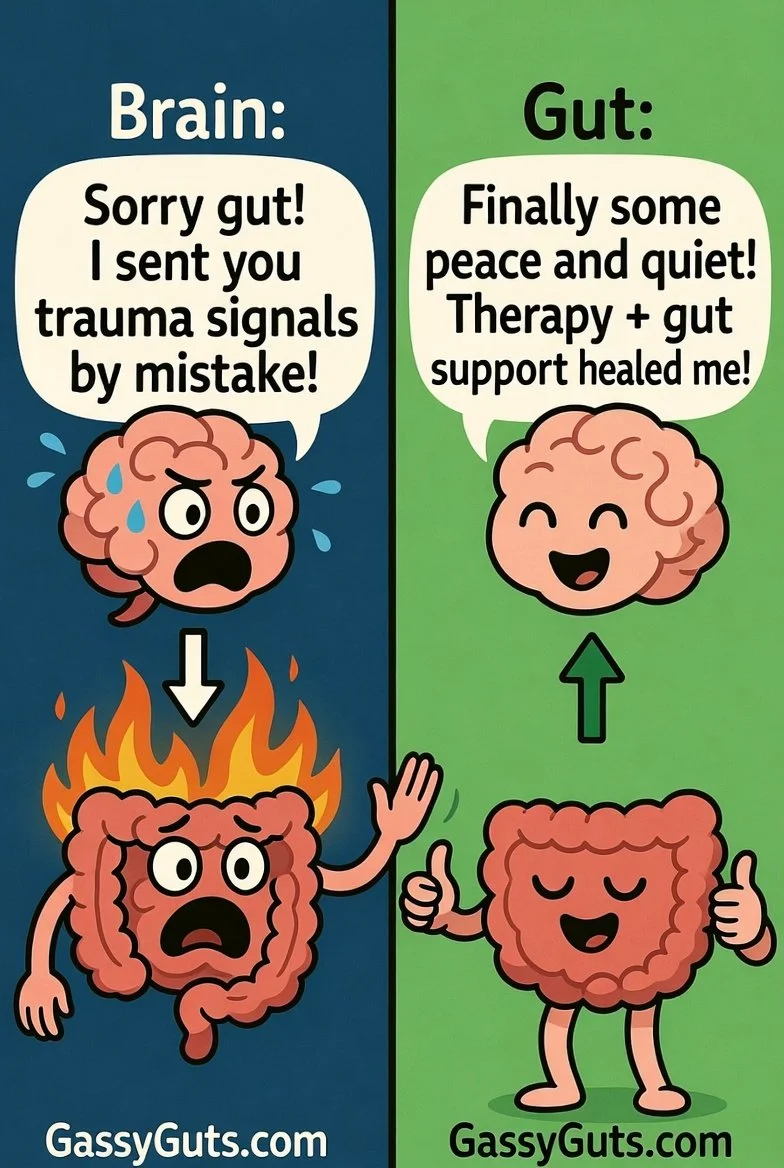
The Gut-Brain Axis: The Missing Middle Between “It Is All Food” and “It Is All In Your Head”
The gut-brain axis gives people a better middle ground. It moves the conversation away from two terrible extremes. Extreme one says everything is food. Extreme two says everything is anxiety. Both are too small. IBS and IBD symptoms can involve food, stress, inflammation, immune signaling, microbiome changes, motility, sensitivity, sleep, trauma history, and learned threat responses.
The phrase “gut-brain axis” can sound like a wellness influencer found a neurobiology textbook and started making candles. But the concept is medically meaningful. Reviews on IBS describe it as a bidirectional communication system involving the nervous system, immune system, endocrine system, microbiome, and intestinal barrier. In IBS, disruptions in that system may contribute to pain, altered bowel habits, dysbiosis, and hypersensitivity.
For trauma survivors, this matters because trauma can train the body to detect danger quickly. That survival skill can become costly when the danger has passed but the body keeps scanning. The gut may become part of the alarm network. Meals, fullness, gas, bowel movement sensations, or minor cramps can be interpreted as threat. Once that loop begins, the person may eat less, restrict more, monitor symptoms constantly, avoid social events, fear urgency, and become hyperaware of every abdominal sensation.
That hypervigilance is not weakness. It is the body trying to protect itself with outdated software. The problem is that digestion thrives under rhythm, safety, enough nutrition, microbial diversity, and calm parasympathetic tone. A guarded body can still digest, but it often digests like it is doing paperwork during an earthquake.
This is why mind-body work can be part of digestive care without becoming mystical fluff. Breathwork, therapy, trauma-informed care, gut-directed hypnotherapy, gentle movement, sleep repair, social support, and nervous system regulation can all help reduce the alarm volume. They work best when paired with practical food strategy and medical care as needed. Nobody needs to meditate their way through rectal bleeding. Also, nobody needs to eliminate twenty-seven foods while ignoring the panic loop that makes breakfast feel dangerous.
Where the FODMAP Diet Fits, and Where It Falls Short
The low FODMAP diet can help some people with IBS identify fermentable carbohydrate triggers. It has a legitimate place when used short term, carefully, and ideally with professional guidance. The problem begins when FODMAP becomes a personality, a prison, or the only tool offered to a person whose symptoms are tied to stress, trauma, food fear, constipation, microbiome fragility, or IBD complexity.
FODMAP restriction can reduce gas and bloating for some IBS patterns because certain carbohydrates draw water into the bowel and ferment in the colon. Helpful. But many high-FODMAP foods are also plant foods rich in fiber, prebiotics, polyphenols, and microbial fuel. Long-term fear of these foods can shrink dietary variety. A gut health plan that only teaches avoidance may calm symptoms briefly while leaving gut resilience underfed. That is a rough trade, like selling your couch to buy a chair.
GassyGuts can take a sharper, smarter stance here. Restriction may be a tool. It should never become the whole philosophy. The Phyto Diet framework makes sense as an enrichment-based alternative because it focuses on plant diversity, food quality, phytonutrients, realistic tolerance building, and gut support rather than endless subtraction. This does not mean throwing raw broccoli at a flaring gut and hoping for enlightenment. It means building a plan around what the person can tolerate now while gradually supporting resilience.
That is especially important for trauma-linked IBS because food fear can become its own symptom amplifier. A person avoids a food after one bad flare. Then avoids a category. Then avoids restaurants. Then avoids eating before work. Then avoids travel. Pretty soon the gut problem has built a tiny kingdom and appointed anxiety as prime minister. The strategy needs to include safe experimentation, symptom tracking, nervous system regulation, and gentle food expansion where appropriate.
Readers who want the practical side can move from this article into 9 Natural Remedies for Healing IBS and IBD and How to Relax Your Gut. Those pieces support the ecosystem by turning this trauma-and-gut explanation into actionable relief steps.
A Practical GassyGuts Framework: What To Do If Trauma Seems Connected to Your Gut Symptoms
Start by separating curiosity from blame. Curiosity says, “My symptoms may have patterns connected to stress, trauma, food, inflammation, and nervous system state.” Blame says, “I caused this.” Blame belongs in the trash, preferably under a leaky bag of old kale. Curiosity gives you data. Blame gives you shame and worse digestion.
Track symptoms with context, not obsession. Instead of only writing “ate salad, bloated,” track sleep, stress level, bowel pattern, cycle phase if relevant, hydration, movement, meal timing, medication changes, and emotional events. A salad after five hours of sleep and a fight with your partner is a different experiment than a salad on a calm day. The gut keeps receipts from the whole body. Annoying, yet useful.
Look for nervous system patterns. Do symptoms flare before appointments, travel, conflict, deadlines, family contact, financial pressure, or loneliness? Does your gut calm down on vacation, weekends, after therapy, after walking, or when eating with safe people? These clues point toward gut-brain involvement. They do not erase food triggers. They add context.
Build meals around tolerance plus diversity. A Phyto-style approach can begin with foods your body already handles, then gradually expand plant variety through cooked vegetables, tolerated fruits, herbs, spices, legumes in tiny portions if appropriate, soluble fiber, soups, smoothies, oats, rice bowls, fermented foods if tolerated, and polyphenol-rich options. The goal is not heroic eating. The goal is steady, boringly effective rebuilding.
Respect red flags and IBD realities. Blood in stool, unexplained weight loss, persistent fever, anemia, severe pain, dehydration, nighttime diarrhea, or rapidly worsening symptoms deserve medical attention. People with Crohn’s disease or ulcerative colitis should work with qualified medical professionals on medication, monitoring, labs, scopes, and major diet changes. GassyGuts can support education and strategy, but inflammatory disease deserves real medical partnership.
Add trauma-informed support. Therapy, EMDR, somatic therapies, CBT, gut-directed hypnotherapy, mindfulness-based approaches, breathwork, and support groups can all be worth exploring. The best option depends on the person. The larger principle is simple: when the nervous system learns safety, the gut may receive fewer danger signals. The digestive tract appreciates calm leadership, which is more than can be said for many group projects.
Choose enrichment over punishment. Chronic gut symptoms can make people treat their body like an enemy. They tighten rules, shrink food variety, panic after flares, and chase every supplement with a glowing label. A better path asks: What supports resilience? What improves regularity? What calms the alarm system? What builds microbial diversity? What reduces inflammation risk? What helps this person eat enough, live enough, and stop planning every outing around bathroom geography?
The Bottom Line: Trauma Can Be Part of the Gut Story Without Becoming the Whole Story
So, can IBS and IBD be from trauma? IBS can be strongly connected to trauma, chronic stress, PTSD, adverse childhood experiences, and gut-brain dysregulation for many people. IBD can be worsened by stress and shaped by brain-gut-immune pathways, while still requiring an inflammatory disease framework and medical care. The cleanest answer is this: trauma may be part of the “why,” part of the flare pattern, part of the sensitivity, part of the food fear, and part of the healing plan. It should never be used as a lazy explanation that replaces real evaluation.
That is the smarter GassyGuts lane. The site can speak to people who feel dismissed by bland medical advice, exhausted by restrictive diets, and overwhelmed by gut health content that treats digestion like a simple math problem. IBS and IBD require a bigger map. Trauma, stress, food, inflammation, microbiome health, gut-brain signaling, and daily habits all belong on that map.
If your gut has been screaming for years, you deserve more than “eat more fiber” and a pamphlet that looks like it was printed during the emotional Bronze Age. Start with the bigger picture at GassyGuts, explore a more realistic path through GassyGuts services, and keep building clarity through the Gassy Gut Blog. Your gut may have learned survival. Now it needs support, rhythm, nourishment, and a plan that treats you like a whole person instead of a malfunctioning lunch tube.
